Physics · Chemistry · Botany · Zoology
These fields help us understand matter, energy, chemical change, plants, animals and the natural systems around us.
Evidence helps us understand. Democracy helps us choose.
Science investigates nature; democratic institutions give people a peaceful way to choose and hold power accountable.
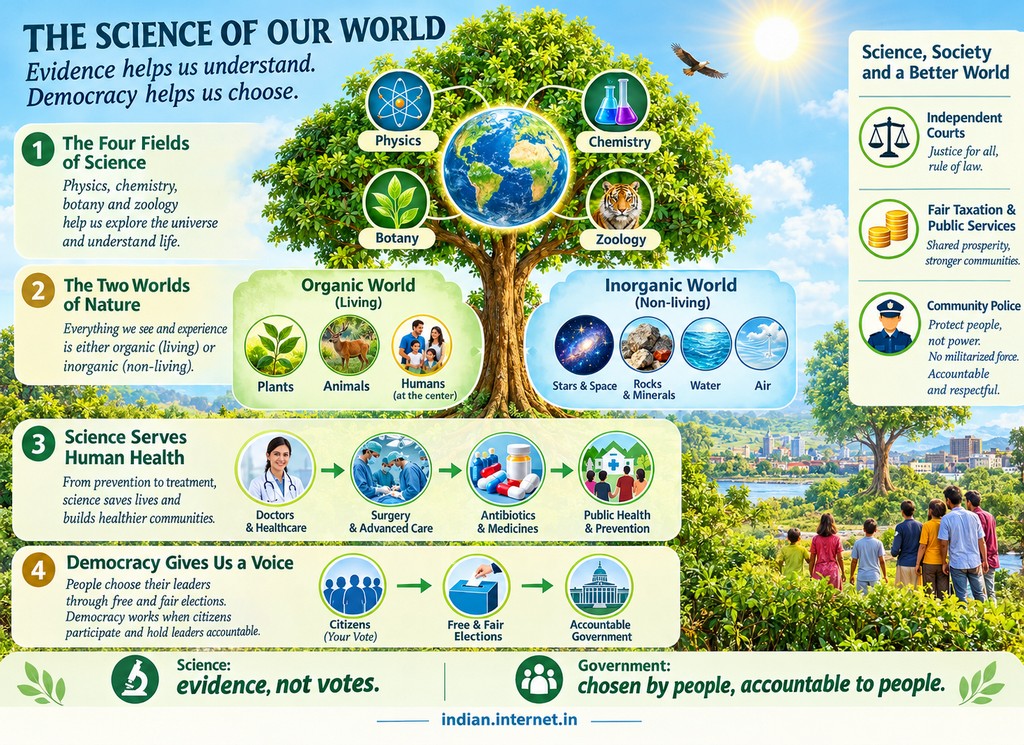
Scientific ideas must be tested through observation, experiments, independent review and repeatable evidence. A vote cannot make a scientific claim true or false, and neither can a king, party or government order.
These fields help us understand matter, energy, chemical change, plants, animals and the natural systems around us.
Life and non-living matter are useful broad categories for exploring the universe. Living systems also depend on chemistry, energy and their surroundings. Human life and welfare deserve special care in how we apply what we learn.
Medical research has advanced surgery, anaesthesia, antibiotics, vaccination, diagnosis and public health. These achievements matter when care is safe, evidence-based and accessible. Antibiotics must be used responsibly to help slow resistance.
Free and fair elections let people choose their representatives and replace them peacefully. Civil rights, free expression, independent media and protection for minorities help democracy remain meaningful between elections.
Courts should be independent and fair. Taxation should be lawful, transparent and accountable. Public money should support public needs, and public institutions should be judged by the quality and fairness of the services they provide—not by profit alone.
Police should serve the public, enforce laws impartially, communicate and de-escalate conflict. Force must be necessary and proportionate, and complaints must be independently reviewable. Public trust grows when officers are accountable to the law and the people.